
"coffee booth"
800 article(s) found

Yunnan coffee is favored by merchants at Kunming Fair.
Yunnan coffee products such as roasted beans, mixed beans, coffee powder, flavored coffee and fine raw beans were favored by Chinese and foreign merchants at the 20th Kunming Import and Export Commodity Fair and the 5th South Asian National Commodity Fair.

The unique design of coffee kiosk
Compared with coffee shops, coffee kiosks are relatively simple to invest and operate, and the returns are likely to be better. For people with coffee dreams, running a coffee kiosk may be a good choice. I wish there were some coffee kiosks on our streets. The unique design of coffee kiosks can attract attention and increase passenger flow. If you run a coffee kiosk, I'm sure you'll pay attention to coffee.

The difference between Sumatran Manning Coffee and Vietnamese Coffee
Professional baristas Please follow the Coffee Workshop (official Wechat account cafe_style) I believe many friends have seen a piece of news: Arabica is on the verge of extinction. The main idea of the news is that due to climate reasons, wild Arabica will become extinct in the wild in 2080, that is to say, there will be no delicious coffee to drink. So the question is, why?

Indonesian Java Coffee Robusta Coffee Raw beans introduction to the History of Robusta Coffee beans Robbs
In the early 1970s, Java cut down Arabica trees introduced by most Dutch and planted Robbosa beans instead. Since then, Java coffee has become greasy, plain and has a strong smell of wheat and tea. Among the few remaining Arabica estates, Djampit is the most famous. These beans are similar to other Indonesian beans, but with obvious sour taste and no texture.
Robusta Coffee Bean Grown in Which Areas Are Grown in Robusta
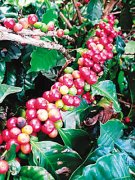
Madagascar is basically a producer of Robaik coffee, but there are plans to increase the cultivation of Arabica coffee beans. Since 1989, the island's coffee industry has been privatized and deregulated, with total coffee production reaching around 1 million bags per year. Domestic consumption of coffee is high because Malagasy people like to drink coffee. The country's Robert

The difference between Arabica and Robusta Coffee Basics
Arabica Coffee Beans Coffea arabica is known as Arabica coffee 70% of the worlds coffee production is from Arabica beans. Arabica coffee is grown in Central and North America, The Carribean, South America, Eastern Africa, Yemen, Papua New

Coffee beans compare the difference between Arabica and Robusta
Arabica Coffee Beans Coffea arabica is known as Arabica coffee 70% of the worlds coffee production is from Arabica beans. Arabica coffee is grown in Central and North America, The Carribean, South America, Eastern Africa, Yemen, Papua New

You don't know the quality Robusta boutique coffee from Madagascar.
Professional baristas Please follow the Coffee Workshop (Wechat official account cafe_style) Madagascar the coffee industry has been privatized and many regulations have been lifted since 1989, with a total output of about 1 million bags a year. As Malagasy people like to drink coffee, the domestic consumption of coffee is very high. The quality of Robusta coffee in the country is excellent, France

Indonesia Java Robusta raw beans Indonesia Java Robusta Java coffee beans Java coffee coffee
In the early 1970s, Java cut down Arabica trees introduced by most Dutch and planted Robbosa beans instead. Since then, Java coffee has become greasy, plain and has a strong smell of wheat and tea. Among the few remaining Arabica estates, Djampit is the most famous. These beans are similar to other Indonesian beans, but with obvious sour taste and no texture.

Cat poop coffee bean species wild Robusta and captive Arabica
The species of cat poop coffee beans include wild robusta species and captive Arabica species. Normal wild Indonesian civets live about 1200 meters above sea level. Indonesian coffee beans at this altitude are generally robusta coffee beans, so the natural species of Indonesian cat poop coffee beans are generally Robusta coffee. Captive cat poop caffeine, it is better to feed civets.

Fine coffee varieties Arabica species and Robusta species
As a crop, tree species and planting environment are the basic factors for the good circulation of coffee beans. At present, the coffee beans in circulation in the coffee market are Arabica (Coffea Arabica) or Robusta (Coffea Robusta). Generally speaking, Arabica coffee trees have fragile vitality, low resistance to diseases and insect pests, and high requirements for planting environment.
Arabica coffee beans and Robusta coffee beans
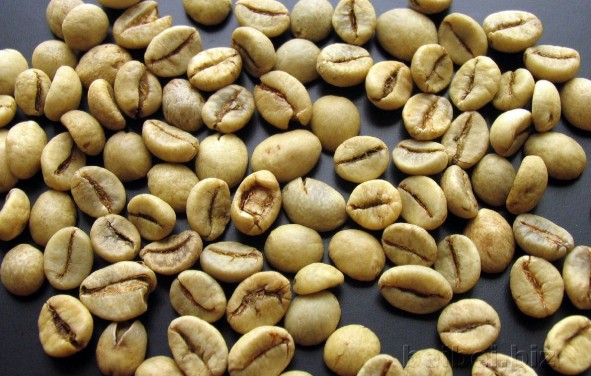
The appearance of Arabica coffee beans is quite obvious compared with that of Robusta coffee beans. Arabica coffee is long, flat, complete and greenish; robusta coffee is round, thicker and whiter. However, it may be because the degree of baking is also different, so this difference alone is not objective.
World Boutique Coffee Estate Indonesia Coffee Beans: Introduction to Indonesian Java Robusta Green Beans
In the early 1970s Java cut down most of the Arabica trees introduced by the Dutch and planted them with robusta beans, and since then Java coffee has become greasy, bland and has a strong smell of wheat tea. Indonesia Java robusta green bean In the early seventies Java introduced most Dutch Arabi
Coffee bean varieties arabica and Robusta coffee and coffee beans
The difference between arabica and Robusta Coffee and Coffee beans [figure]

Two common coffee tree species: Arabica and Robusta
Two common coffee trees: Arabica and Robusta. Arabica coffee grows best at high altitude. this coffee has a much more refined flavor than other coffee, and its caffeine accounts for only 1% of the total weight of coffee. Robusta coffee has a mellow taste, strong resistance to diseases and insect pests, and high yield per plant. This kind of coffee grows

The Best Robusta Coffee beans in Africa History of Fine Coffee in Angola
Professional baristas follow the Coffee Workshop (Wechat official account cafe_style) Angola was once a big coffee producer. In the mid-1970s, Angola (Angola) exported 3.5 million bags of coffee a year, 98 per cent of which were robusta (which may be the best robusta coffee in Africa). In 1990, total production fell to 200000 bags. Before Angola

Robusta coffee beans commercial coffee beans
The bean shape is larger, the front is gradually round, the back is round and convex, and the crack is straight. Robasta coffee trees are native to Madagascar in central and western Africa and Indonesia in Asia, and account for about 20% to 30% of the world's output. Robasta coffee tree is suitable for planting in the lowlands below 500 meters above sea level. It has strong adaptability to the environment, can resist the harsh climate and resist.

Stay away from instant coffee and choose Robusta coffee.
Because of the cost, instant coffee of course chooses Robusta coffee, which is produced in Vietnam, Hainan, Yunnan and some African countries. In addition, broken beans, bad beans and maldeveloped varieties are often baked and ground directly without screening. Anyway, it is only the extraction of caffeine, and the lack of aroma can be reconciled by all kinds of flavors and additives.

Introduction of Ugandan coffee beans, the country of origin of Robusta coffee
Uganda Organic Bugisu producing country: Uganda Grade: HB growing area: Elgon region, Mbalai Brand: organic Bugisu treatment method: wet treatment appearance: 1.8d scarp 300grgrgrera 16-18SCR Variety: unknown Note: this coffee is produced in the Elgonne Mountain region of Uganda, with balanced acidity and rich oil between 1600 and 1900 meters above sea level.
The difference between arabica and Robusta Coffee and Coffee beans
The difference between arabica and Robusta Coffee and Coffee beans [figure]